
Cold Coffee vs Hot Coffee: Which is Better for Your Health? (Science-Backed Comparison)
Cold Coffee vs Hot Coffee: Which is Better for Your Health?
For coffee enthusiasts, the choice between a steaming hot cup and a refreshing glass of iced coffee can often be a matter of preference or the day’s weather. But when you dive into the science, the temperature at which your coffee is brewed and consumed reveals surprising differences in its chemical composition, potential health benefits, and even its impact on your digestion.
Is your daily piping hot brew unlocking the full range of healthy antioxidants, or is the lower acidity of a cold brew better for your stomach and enamel? The answer is complex and depends entirely on your personal health goals.
This comprehensive, science-backed comparison will guide you through the chemical, nutritional, and health factors of cold coffee versus hot coffee, helping you determine which brewing method truly earns the title of “healthier cup.”
best time to drink coffee for energy and focus- https://coffeehubinfo.com/the-right-time-to-drink-coffee-best-time-for-energy-health-benefits-2025-guide/
when to switch to decaf coffee beans- https://coffeehubinfo.com/what-are-decaf-coffee-beans-a-complete-guide-for-coffee-lovers/
The Core Difference: Brewing Method and Chemistry
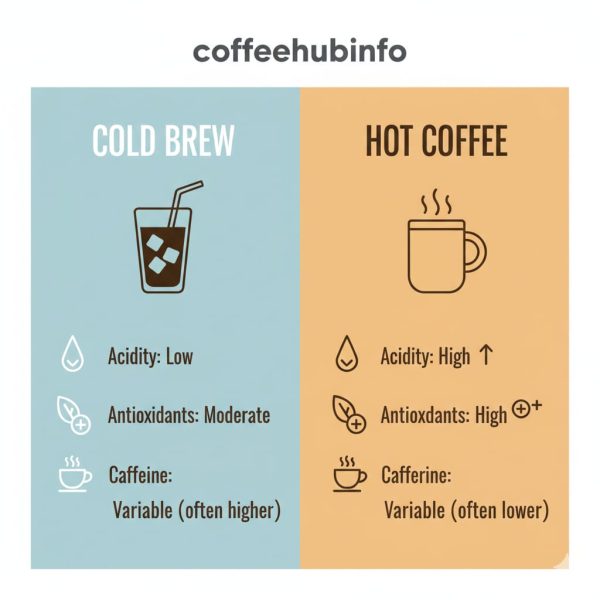
At its heart, the difference between hot and cold coffee is the extraction method—the way water interacts with the coffee grounds to pull out flavor compounds, caffeine, and beneficial compounds.
Acidity and Digestibility: Why Cold Brew is Milder

One of the most significant differences lies in the acidity of the final product.
Hot coffee is brewed quickly using near-boiling water, which extracts oils and acidic compounds—such as Chlorogenic Acids—that degrade at high temperatures into highly acidic forms. This process results in the typical bright, sometimes bitter, flavor profile, but it also means a lower pH level (higher acidity). For sensitive individuals, this high acidity can lead to:
- Acid Reflux and Heartburn: The acidity irritates the esophageal lining.
Stomach Upset: The gastrointestinal tract struggles to process the acidic compounds.
Enamel Erosion: High acidity contributes to tooth enamel wear over time.
In contrast, Cold Brew is made by steeping grounds in cold or room-temperature water for 12 to 24 hours. Because the process avoids high heat, it extracts fewer of the acidic compounds and oils. Studies show that cold brew coffee can be up to 70% less acidic than traditional hot coffee.
Key Takeaway: If your primary health concern is gastrointestinal comfort or acid sensitivity, cold brew coffee is scientifically the superior choice due to its dramatically reduced acidity.
Antioxidants: Which Method Extracts More?

Coffee’s reputation as a healthy beverage largely stems from its incredibly high content of antioxidants, particularly Chlorogenic Acid (CGA). These compounds fight damaging free radicals in the body and are linked to reducing the risk of numerous chronic diseases.
The brewing temperature affects how many of these beneficial compounds end up in your mug:
- Hot Coffee: The high temperature is highly efficient at rapidly extracting antioxidants. Research suggests that hot brewing may extract a higher total concentration of certain antioxidant components, particularly the unstable ones, in a shorter period.
- Cold Brew: While the longer steeping time ensures full flavor extraction, the cold water is less effective at pulling out some of the same antioxidant levels as hot water. However, the difference is often marginal, and cold brew contains its own unique set of stable antioxidants.
- The Verdict on Antioxidants: Both brewing methods deliver substantial amounts of healthy antioxidants. While hot coffee may extract slightly more in total, the vast health benefits of coffee are present regardless of whether it’s brewed hot or cold.
complete guide to coffee filter sizes- https://coffeehubinfo.com/coffee-filter-sizes-explained-easy-guide-to-choose-the-right-one/
Direct Health Comparison: Caffeine, Metabolism, and Hydration

Beyond the internal chemistry of the bean, the final cup’s temperature and preparation profoundly affect your energy, metabolism, and even the way you hydrate.
Caffeine Content: Comparing Strength and Effect
The caffeine in your cup is your body’s primary stimulant. How much you consume depends less on temperature and more on concentration and dilution:
- Cold Brew: Cold brew is often served as a highly concentrated extract that is meant to be diluted. Because the concentrate contains a lower water-to-coffee ratio, if consumed undiluted, a single serving can contain significantly more caffeine than a standard cup of hot coffee. This makes it a powerful pre-workout drink or a strong morning booster.
- Hot Coffee: A standard cup (8 oz) typically contains around 95 mg of caffeine. Since it is consumed as brewed, its concentration is generally lower than the cold brew concentrate.
Impact on Energy: The higher concentration in cold brew means you should monitor your dosage carefully. While it can provide a sustained energy lift, excessive intake can lead to increased cortisol levels and the uncomfortable feeling of “caffeine jitters.”
The Impact on Metabolism and Calorie Count
When consumed black, both hot and cold coffee are virtually calorie-free and can aid metabolism due to caffeine’s thermogenic effect (slightly increasing the body’s calorie burn). However, the way they are often customized is the critical factor:
- Cold Coffee Danger: The vast majority of commercially prepared cold coffee drinks (lattes, frappes, flavored cold brews) are loaded with sugar, syrups, whipped cream, and high-fat milk. This transforms a healthy, zero-calorie drink into a dessert that can exceed 500 calories and cause blood sugar spikes.
- Hot Coffee Advantage: Hot coffee is more traditionally consumed black or with minimal additives, keeping its caloric value low and its metabolic benefits intact.
- Healthy Choice: The healthier choice for metabolism is the one with the fewest additives. If you can drink your cold brew black or with a splash of unsweetened milk, it remains a metabolic friend.
Hydration and Water Content
Caffeine is a mild diuretic, often leading to the misconception that coffee causes dehydration. While true, the fluid in a cup of coffee largely counteracts this effect.
- Cold Brew: Since cold brew is generally consumed over ice and diluted with water or milk, its higher total fluid volume arguably makes it slightly more hydrating than a smaller, concentrated cup of hot espresso.
- Hot Coffee: Still primarily water, hot coffee contributes significantly to your daily fluid intake, though its heat may not feel as refreshing on a hot day.
Pros and Cons: A Quick Comparative Chart
Step 1: Pros of Cold Coffee (Cold Brew)
- 1. Low Acidity
Cold brew has up to 70% less acidity than hot coffee.
Gentle on stomach, reduces acid reflux, heartburn, and enamel erosion.
- 2. Smooth Taste
Less bitter, naturally sweeter flavor.
Great for those who dislike strong bitterness of hot coffee.
- 3. Concentrated Energy
Cold brew concentrate can have higher caffeine per serving → sustained energy boost.
Ideal for pre-workout or long work sessions (if diluted properly).
- 4. Versatile
Can be consumed black, with milk, or mixed with flavor syrups.
Works for both refreshing iced drinks and creative coffee recipes.
Step 2: Cons of Cold Coffee
- 1. Higher Caffeine Risk (if undiluted)
Cold brew concentrate can cause caffeine jitters if consumed straight.
Monitor intake for sensitive individuals.
- 2. Often High-Calorie Drinks
Many commercial cold coffees add sugar, syrups, whipped cream → 500+ calories per drink.
Can spike blood sugar and reduce metabolic benefit.
- 3. Longer Preparation Time
Homemade cold brew takes 12–24 hours to steep.
Not ideal if you want instant coffee.
Step 3: Pros of Hot Coffee
- 1. High Antioxidants
Hot brewing extracts slightly more chlorogenic acids and antioxidants.
Supports heart health, fights free radicals, and boosts immunity.
- 2. Quick & Convenient
Ready in minutes → easy for daily routine.
- 3. Controlled Caffeine
Standard 8 oz cup has ~95 mg → easier to manage intake.
- 4. Lower-Calorie Option
Hot coffee usually consumed black or with minimal additives → better for metabolism and weight management.
Step 4: Cons of Hot Coffee
- 1. High Acidity
May irritate stomach or esophagus in sensitive individuals.
Can contribute to enamel erosion over time.
- 2. Bitter Taste
Some may find hot coffee too strong or bitter.
Might require sugar or milk, reducing health benefits.
Frequently Asked Questions (FAQs) on Coffee Temperature and Health
Q1: Which coffee type is better for stomach sensitivity and acid reflux?
Cold Brew is overwhelmingly better for stomach sensitivity. Its cold brewing process results in significantly lower acidity, minimizing the common triggers for acid reflux, indigestion, and heartburn.
Q2: Does the temperature of the coffee affect its antioxidant levels?
Yes, but minimally. Hot water extracts Chlorogenic Acid (CGA) and other antioxidants very efficiently. While cold brew may extract slightly less overall, the difference is not enough to negate its profound health benefits. Both are excellent sources of antioxidants.
Q3: Does cold coffee help you lose weight more than hot coffee?
No, the temperature difference does not significantly affect weight loss. Both are beneficial only when consumed black. The key factor for weight gain is the added sugar and cream found in most commercially sold cold coffee drinks.
Q4: Is Cold Brew concentrate too strong for daily consumption?
Cold Brew concentrate is indeed very potent. If you are sensitive to caffeine or prone to anxiety, it is crucial to dilute the concentrate according to package instructions or dilute it even further to manage your caffeine intake and avoid overstimulation.
Final Verdict: Finding Your Healthier Cup
The debate between cold coffee and hot coffee does not yield a single, definitive “winner” for everyone. The healthier choice is the one that best aligns with your personal physiology and lifestyle:
If you struggle with digestion, acid reflux, or sensitive teeth: Cold Brew is your superior choice, prioritizing gastrointestinal comfort and long-term oral health.
If you seek maximum antioxidant extraction and drink your coffee black: Hot Coffee retains a marginal edge in antioxidant potency and offers a consistent, measured caffeine dose.
If you prioritize weight management: Both are equally healthy only if you strictly avoid sugar, syrup, and excessive high-calorie creamers.
The best coffee ritual is the one you can sustain healthily. Experiment with both temperatures, listen to how your body responds—especially your gut and sleep cycle—and enjoy your brew guilt-free!
fun morning coffee mug ideas to start your day right- https://coffeehubinfo.com/morning-coffee-mug-why-it-matters-and-how-it-shapes-your-daily-routine/


