
Coffee Filter Sizes Explained: Easy Guide to Choose the Right One
Coffee Filter Sizes Guide: Find the Right Size for Your Coffee Maker
Making the perfect cup of coffee starts with the right coffee filter. Many coffee lovers don’t realize that using the wrong filter size can affect taste, strength, and overall brewing experience.
In this guide, you’ll learn everything about coffee filter sizes — from #1, #2, #4, and #6 — which filter fits your coffee maker, the differences between cone and basket filters, and the pros and cons of each type. By the end, you’ll be able to choose the perfect filter that makes every cup delicious and hassle-free.
If you want to know exactly how much coffee to make 12 cups, check out our detailed guide https://coffeehubinfo.com/how-much-coffee-to-make-12-cups-easy-coffee-ratio-guide/ for precise measurements.”
Why Coffee Filter Size Matters
Ever made coffee that tasted too weak or too bitter?
Often the reason isn’t the beans — it’s the wrong filter size.
Each coffee maker is built for a specific filter size, and that small mismatch can change your coffee’s flavor completely.
What Do Coffee Filter Sizes Mean?
Coffee filters come in numbered sizes — #1, #2, #4, and #6.
The number tells you how much coffee the filter can hold and which coffee maker it fits.
- #1 filter: For single-serve or one-cup brewers.
- #2 filter: Fits 2–6 cup coffee makers.
- #4 filter: Works for 8–12 cup drip machines.
- #6 filter: Used for large or commercial pour-over setups.
☕ Note: You might find mentions of #3 or #5 online, but they’re rarely made anymore. The main four sizes cover nearly all home and office machines.
Coffee Filter Size Chart
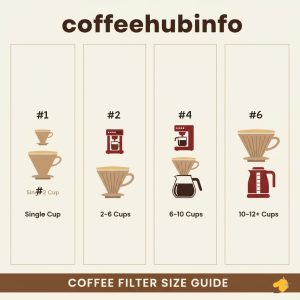
#1
Size- 1 cup
Cups of Coffee Single-serve pour-over
Best For Example Machines Hario V60 01, Melitta 1-cup
#2
Size- 2–6 cups
Cups of Coffee- Small drip brewers
Best For Example Machines- Bonavita, Melitta, Braun
#4
Size- 8–12 cups
Cups of Coffee- Home drip machines
Best For Example Machines- Mr. Coffee, Cuisinart, Hamilton Beach
#6
Size- 10+ cups
Cups of Coffee- Large brewers
Best For Example Machines- Industrial pour-over systems
Cone vs Basket Filters – What’s the Difference?
Cone Filter
Shape- Pointed bottom
Flavor Style- Strong and rich taste
Basket Filter
Shape- Flat bottom
Flavor Style- Smooth and balanced taste
Cone filters let hot water flow through the center, extracting bold flavors.
Basket filters spread the water evenly, making your coffee lighter and smoother.
If you like your coffee strong, go for cone filters.
For a classic, everyday brew, basket filters do the job perfectly.
Materials – Paper, Metal, or Cloth Filters
Paper Filter
Good Side- Easy to use, clean flavor
Downside- Single-use, creates waste
Metal Filter
Good Side- Reusable, rich flavor
Downside- Lets some fine grounds through
Cloth Filter
Good Side- Soft, smooth taste
Downside- Needs cleaning after every brew
Paper filters are the most common and beginner-friendly.
Metal filters are great if you want an eco-friendly option.
Cloth filters work well for those who enjoy experimenting with flavor texture.
How to Choose the Right Filter Size

Choosing a filter isn’t hard once you know your machine. Follow these quick steps:
1. Check your coffee maker manual – most brands mention the right size (#2, #4, etc.).
2. Match shape and size – cone filters only fit cone brewers; basket filters fit flat ones.
3. Decide on filter type – paper for a clean cup, metal for richer flavor.
4. Avoid wrong size tricks – folding a bigger filter might work once, but it ruins taste and flow.
Example: If you use a 10-cup drip machine like a Cuisinart, a #4 paper filter is ideal.
Pros and Cons of Different Coffee Filter Types
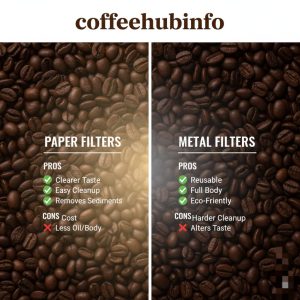
Paper Filter
Pros- Cleaner brew, removes oils
Cons- Not reusable
Metal Filter
Pros- Strong flavor, eco-friendly
Cons- Can make coffee slightly cloudy
Cloth Filter
Pros- Natural taste, reusable
Cons- Needs frequent washing
No one filter is “best.”
It depends on your taste and how much effort you want to put in cleaning or replacing filters.
Frequently Asked Questions (FAQ)
1. Can I use a #4 filter instead of #2?
You can try, but it’s not ideal. A #4 filter is taller and can fold or collapse in smaller brewers.
2. What happens if I use the wrong size?
The water may overflow or pass too fast, leaving your coffee weak or bitter.
3. Are all #4 filters exactly the same?
Almost, but small shape differences exist between brands. Stick to filters made for your coffee maker if possible.
4. How often should I replace my metal filter?
If cleaned well, metal filters can last years. Just check for damage or clogging over time.
5. Does filter size really change taste?
Yes, because water flow and saturation depend on fit. The right size gives balanced extraction and flavor.
Storing Coffee Filters the Right Way
Keep your filters dry and away from strong odors.
Use an airtight container if possible — coffee filters can easily absorb smells from the kitchen.
Final Thoughts
Choosing the right coffee filter size is a small step that makes a big difference.
It helps your coffee brew evenly, keeps flavor consistent, and prevents mess or overflow.
Once you know your coffee maker’s size and shape, picking filters becomes easy.
Use this guide, and you’ll never second-guess your choice again.
After brewing, follow our guide on coffee drinking etiquette https://coffeehubinfo.com/coffee-drinking-etiquette-a-guide-to-polite-coffee-culture/ to enjoy your coffee like a pro.


